Reflecting…
It’s been a strange month, folks. Luckily, I am in my own apartment, and can walk to the store if I require anything, unlike those who have been officially quarantined on cruise ships, hospitals, or quarantined housing. I am glad I had the foresight to fly in a week before orientation, in order to spend time seeing historical sites in Seoul, and quality time with my friend and her family. Many EPIK teachers arrived within 24 hours of orientation, and only saw the airport area and the view from the buses taking us to our venue. This is not how I imagined my first month in South Korea to be, but the experience definitely makes for a different (albeit somewhat boring) story to tell people in the future!!
Daegu
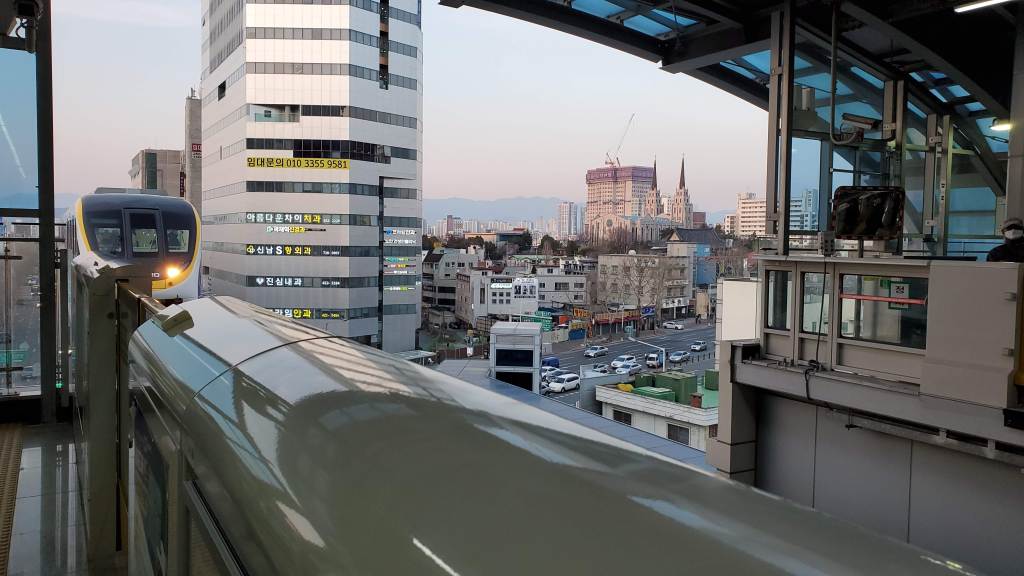
Daegu is a city amongst mountains, and sits at – a not so very high – 45 meters (148 ft) above sea level. Its highest peak is Pisul-san (1083 m / 3556 ft). I have always enjoyed mountains, and after spending a month in Washington state this past November, I appreciate the good trails that are so close by.
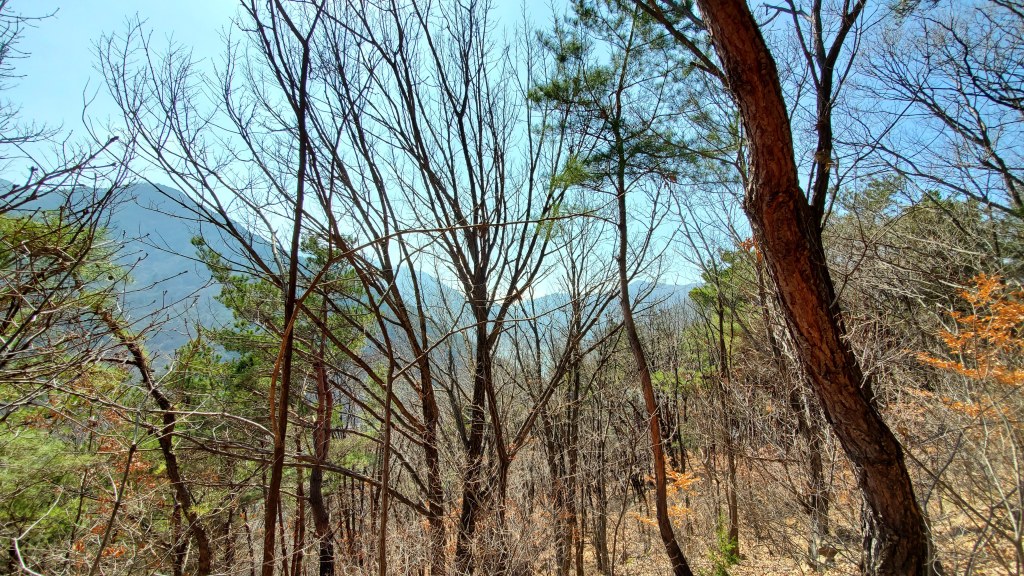
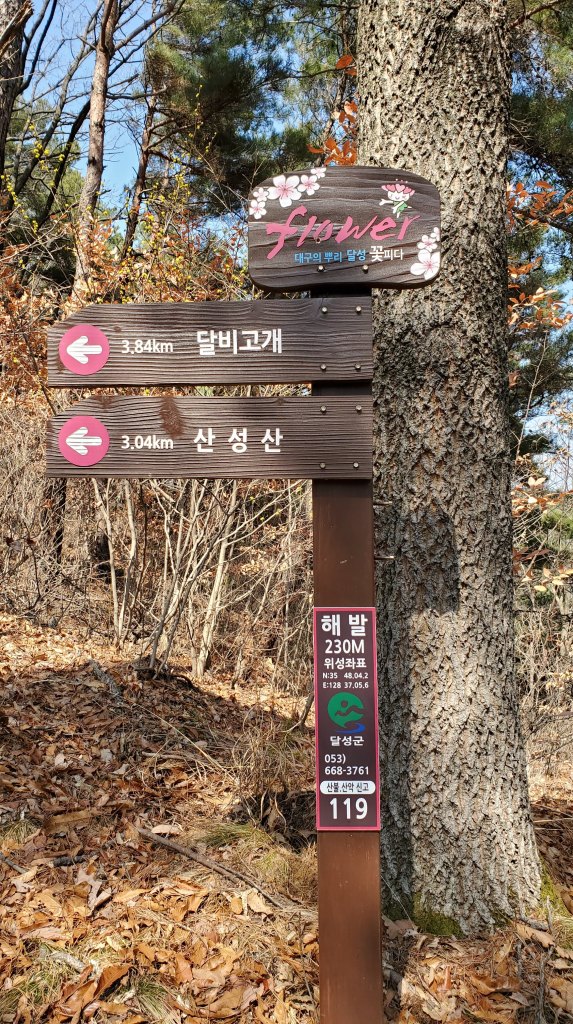
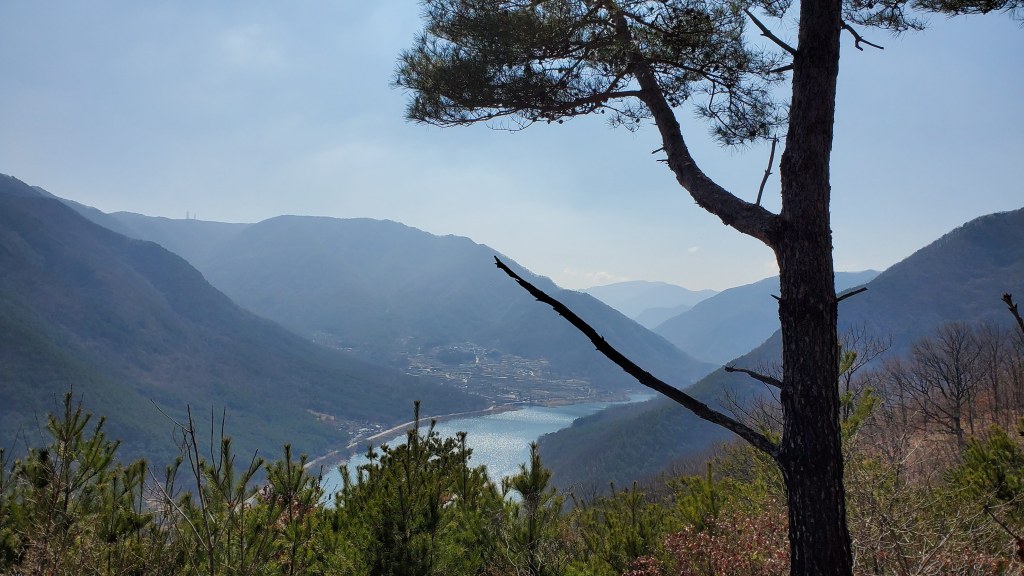
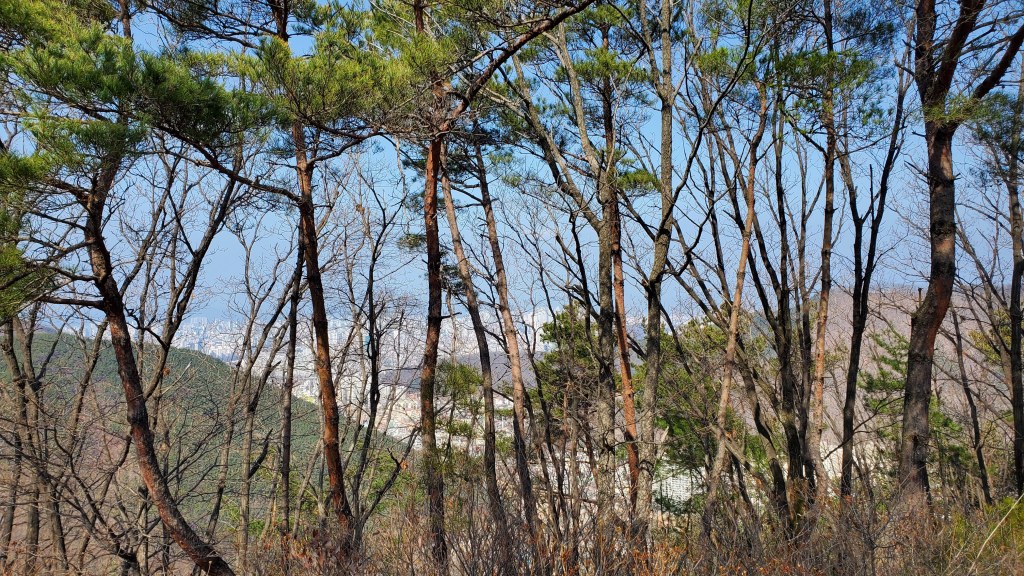
I have Sabang-san mountain that sits right across the main street from my apartment, and I took the liberty to hike to the top last Sunday. As all the signs are in Korean, and there is very little online about the hiking trails, I was not sure how long the trek would take to walk all the way through, nor where I would come out at the other end. I decided once at the top, it would be better to turn around and go back the way I had come. The trail was rough, with lots of rocks and roots to have to step on or climb over, and lots of up-hill climbs, but once arriving at the top, I had a clear view of the city below to my right, and a beautiful lake and reservoir to my left. The sun was out, the sky was blue and clear of any smog, so the sunlight glittered on the waters. It was a beautiful treat!
Q’s and A’s
I had received questions from some of you and wanted to take this time to answer as best as I could:
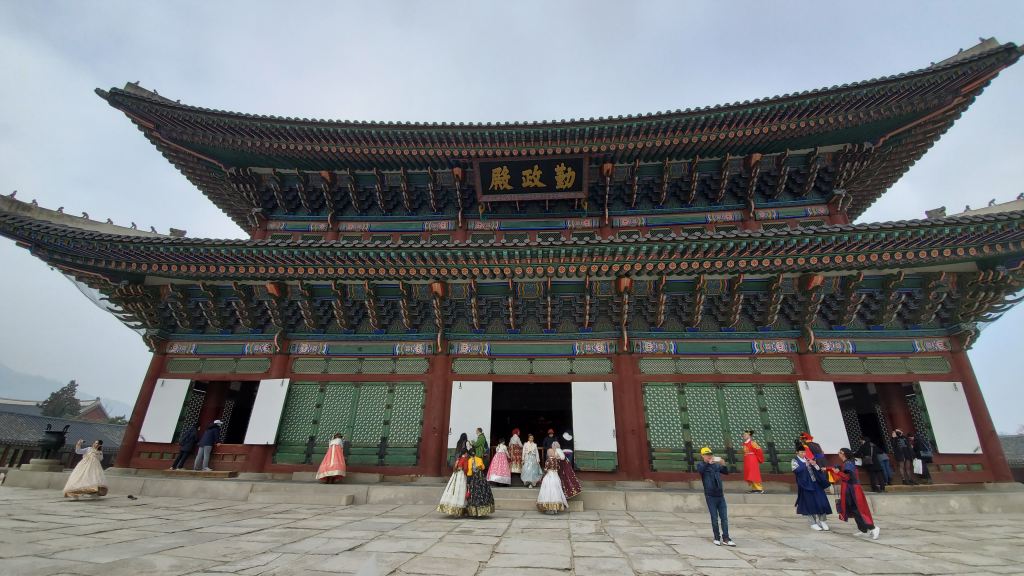
1- Has anyone said why the old roof tops swing up? Beauty or a function?
My research found that roof shape, and all architecture, was to be in harmony with nature. As Korea is a mountainous country, the traditional roof styles reflected this. If someone has further knowledge about the roofs and eaves, please let me know!
Going beyond the question…
Painted designs on the traditional buildings: Dancheong incorporated the 5 elements theory with the 5 directions to promote stability and peace for present and afterlife.
Blue: East, spring, and wood
Red: South, birds, summer and fire
White: West, tigers, fall, and gold
Black: North, winter, and water
Yellow: Center, periods between seasons and Earth
You can read more about the Dancheong painting here:
Dancheong Korean Art Painting Buildings
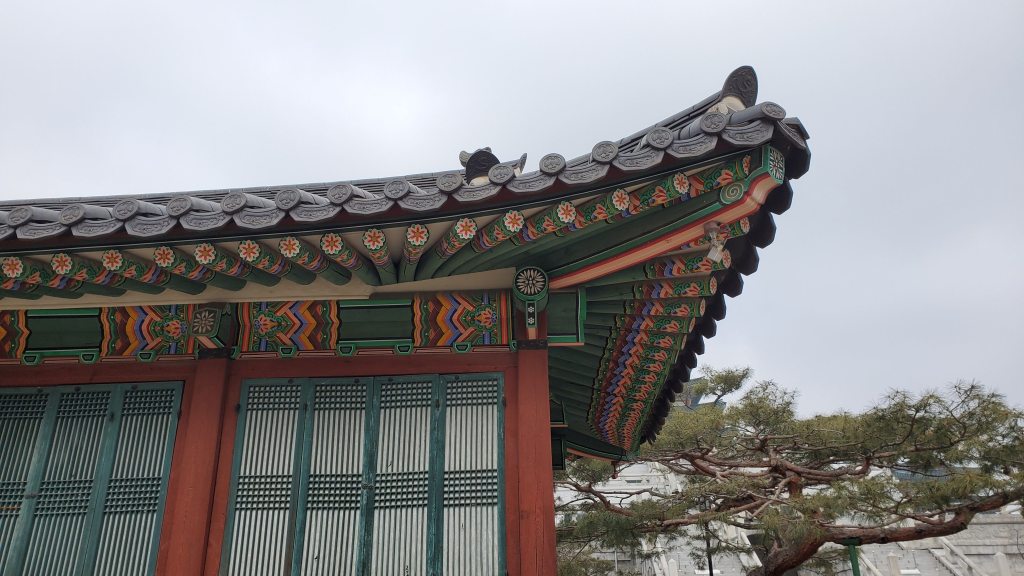
2- Are there sliding doors in the old buildings? Are they paper?
The doors within a building are usually paper, similar to what you would have seen in The Last Sammurai. Some may have intricate wooden carved designs added to them.
3- What is Korea and Japan’s history
Korea’s history is long and intermingled with Chinese and Japanese. Its many kingdoms weaved in and out of lands that are now recognized as China. To avoid misinforming you with my own interpretation of the past, I found 2 videos on youtube that will hopefully help you better follow the complex history of kingdoms expanding, disbanding, conquering, and trading. I suggest you first watch the Kingdoms of Korea link ( about 5 minutes long) and then take on History of Korea (about 14 minutes long).
Kingdoms of Korea
History of Korea
4- How many EPIK teachers are with you?
The orientation I attended hosted 300 EPIK teachers. There was a second orientation being hosted just 10 minutes away at a University, and I believe they were also 300 strong. Additionally, other “late acceptance” groups will be coming in at the end of March and sometime in April. I believe, in total, there are to be approximately 900 of us in South Korea.
5- Have any done this before?
I would say about 30% of my group have had previous experience teaching English in foreign countries or have worked in Korea teaching at private schools (Hagwons).
6- What age kids will you teach?
I will be teaching students from Elementary School (grades 3-6) and Middle School (grades 1-3). The school system is broken into Elementary (6 years), Middle (3 years), and High (3 years). Ages are a bit more difficult to guess, however. In “Korean age” the students should match to the age of students in the USA. For example, in the US, children tend to start kindergarten around 5 or 6. Korean children tend to start kindergarten at their Korean age of 5.
One reason why Korean Age plays an important role in the school systems is so that students in a class are equal. Age is very important in the Korean culture, and people will often ask you your age upon meeting you, in order to decipher who is older and who should speak with honorific Korean.
What, you may ask, is Korean Age?
Korean Age is how many years you have experienced, rather than how long you have lived.
From the day of birth, a baby is 1 year old, rather than starting at 0.
From January 1st of each year, a person adds 1 year to their age.
Calculation breakdown:
WARNING! IF YOU ARE ALREADY AFRAID OF YOUR CURRENT AGE, FOR WHATEVER SILLY REASON, DO NOT ATTEMPT TO CALCULATE YOUR KOREAN AGE, FOR FEAR OF DISAPPOINTMENT.
(current year + 1)-birth year = Korean age
As I was born December 14th, 1988…
Western age: 31
Korean age: (2020+1)-1988=33
School
As of now, school is scheduled to begin on the 23rd of March. I was finally able to set foot on the middle school grounds with my Co-Teacher, in order to meet the principal and receive text books. I am beginning to create lesson plans, and anxiously awaiting the first day of class in just over a week. Teachers, I am sure I will be reaching out to you for guidance and suggestions (looking at you, Mom & Char!).
Stay classy, readers!
 A Girl And Her Pez