Thursday, Part 1
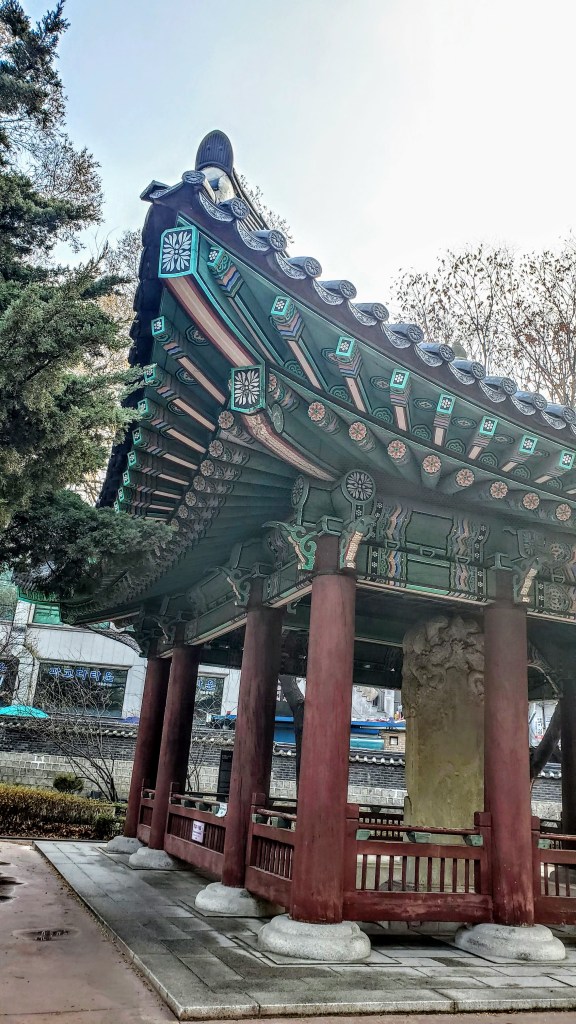
As I was roaming the Myeondong area on my first full day in Seoul I came across Tapgul Park. Originally, these grounds housed a Buddhist temple during the Goryo Dynasty (913-1392). In the late 19th – early 20th Centuries, a park was constructed. The park became a place to fight for freedom from occupation by the Japanese Empire in 1919. The Korean people declared their rights for independence in this park, and on the 1st of March, 1919, thousands came to march and resist the Japanese. As you walk along the park wall, you see beautiful, yet haunting, carvings that depict the march, the battle, and the strength of a people determined to be heard.
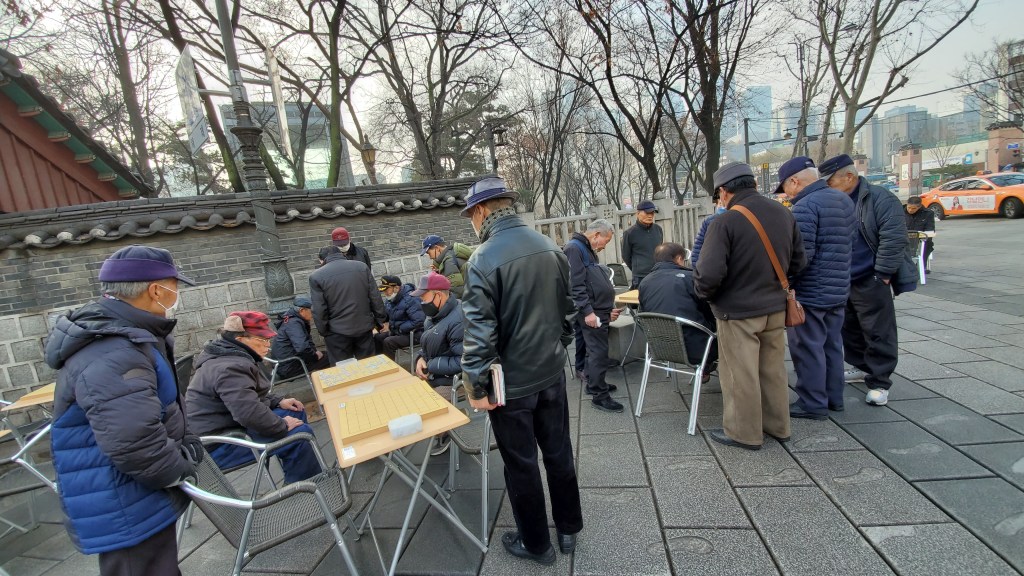
If you stand in the center of the park, you do not feel the dark past of this place, but rather a freeness and calm. Many older Koreans were also walking throughout the park, and I even received an enthusiastic thumbs up from one gentleman. Just outside the park, I found retired men playing Janggi (Korean Chess). It is a board game that I am going to attempt to learn over this next year. While there were about 4 games being played, there were many onlookers who would watch silently, huddled around a game. I even witnessed two players get into a heated (so it appeared) discussion about a move one of them had just made.
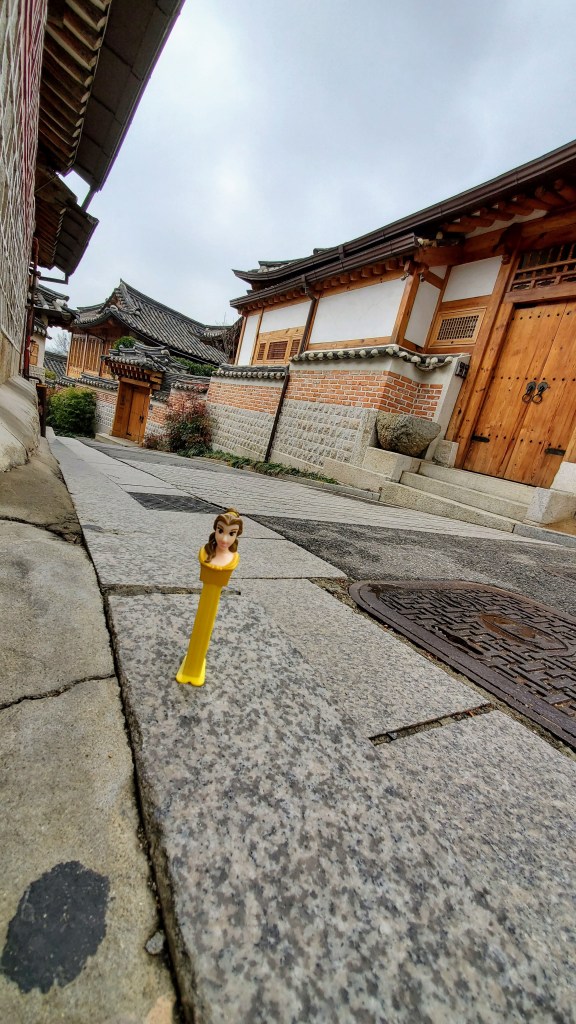
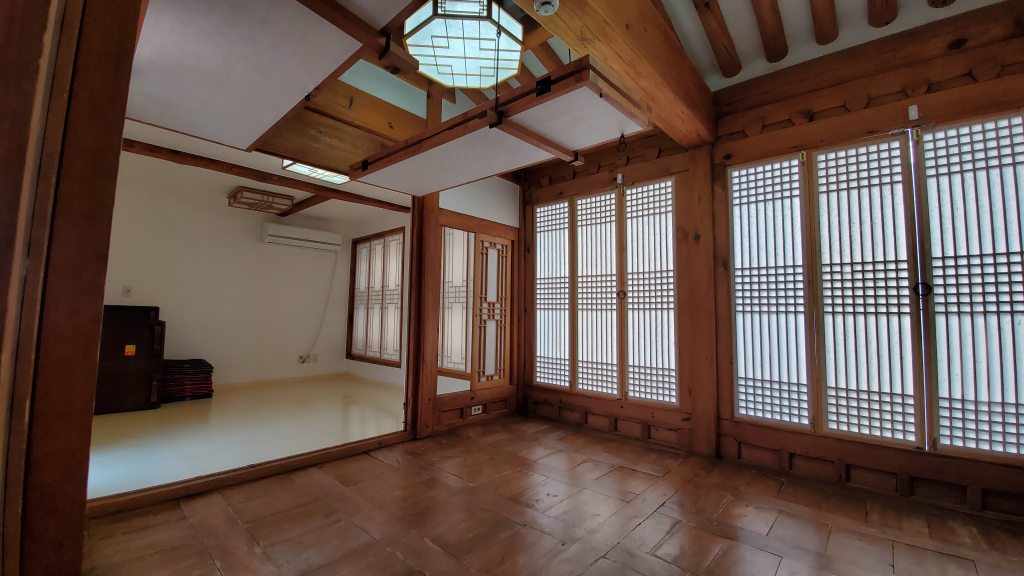
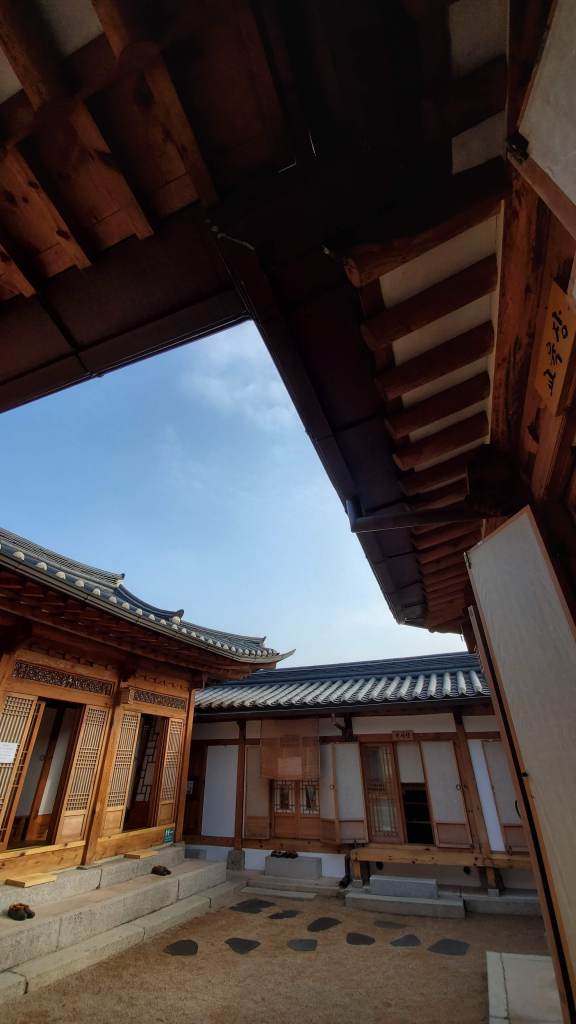
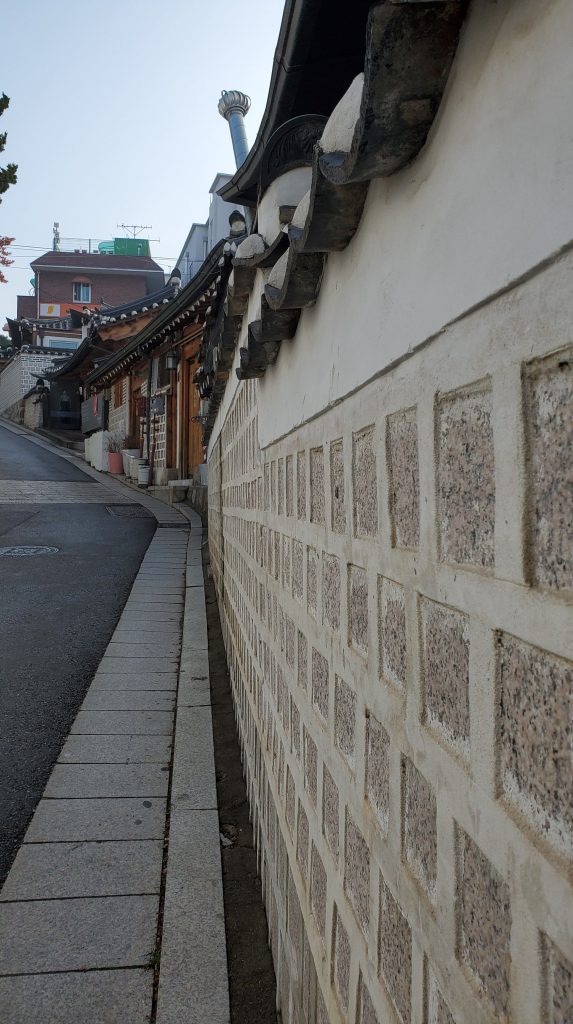
I continued exploring, and headed to Bukchon Hanok Village. Although the majority of this tourist attraction happens to be residential, these traditional houses (hanoks) were built during the Joseon Dynasty (approximately 1392-1897), and some house the arts and crafts of the dynastic period. I had the pleasure of speaking with the curator for the Kum BakYeon Workshop. Mr. Kim was proud to represent his family, and their lives’ works of art. This workshop worked with gold imprinting, keeping the ancient Korean traditions alive. Mr. Kim offered a rich history regarding the hanbok (Korean traditional clothing) compared to Chinese and Japanese, as well as the various styles of gold imprinting throughout the various dynasties. If you happen upon the village, please take the time to talk to the curators, take a class or two. I will be returning here over the next year to take classes and learn more.
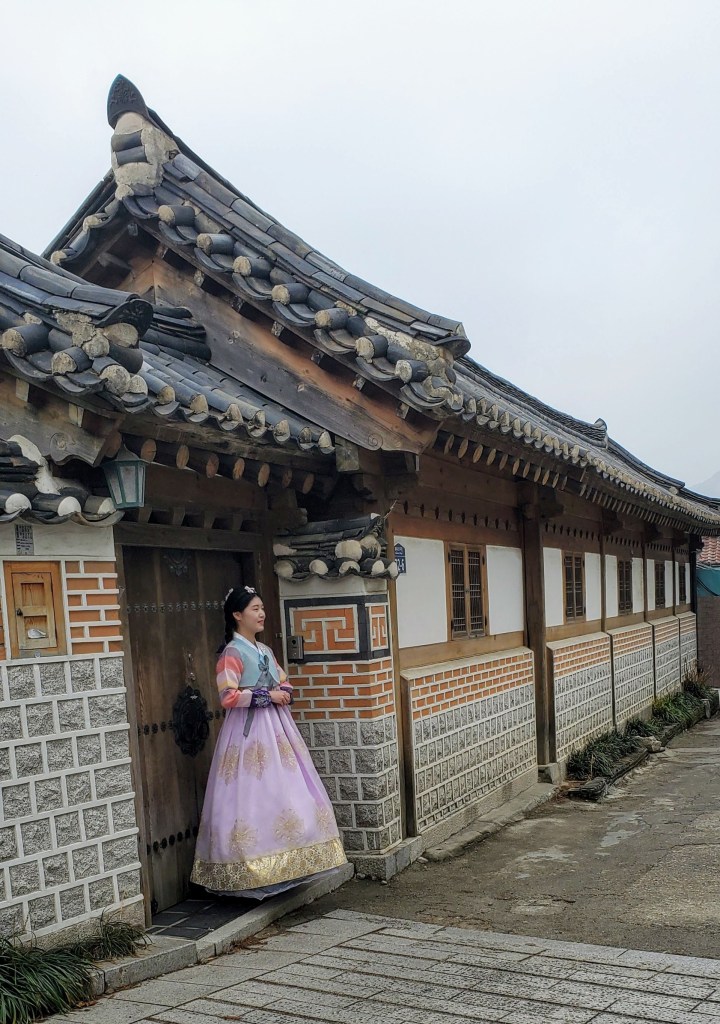
As you walk the winding streets of Bukchon Hanok Village, you will see many donning the traditional hanbok. Men, women, and children can rent the beautiful garb, bringing even more authenticity to the ancient feel of the area.
Continue to the next post to read about Gyeonbokgung Palace!
 A Girl And Her Pez